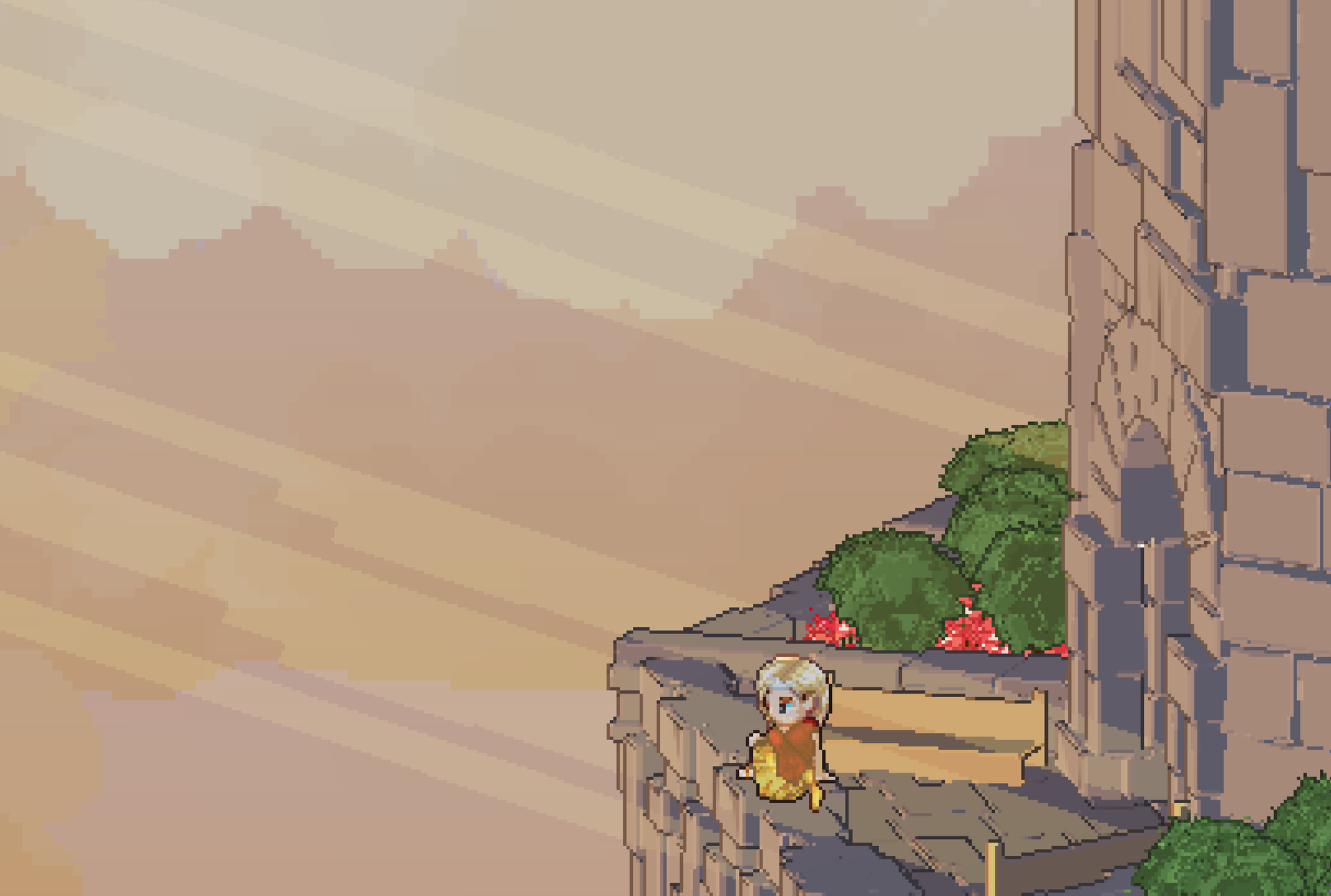
Uncrowned player character on a castle balcony above a sunlit valley

Game Design

Intro

Project Description & Context

The brief for Uncrowned was to create an original narrative RPG in Godot, with a complete story and multiple endings shaped by player choices. Exploration and minigames would support the narrative. For ElemAnt, we were asked to turn a luck-based Python prototype of fewer than 50 lines into a strategy game in Unity. That meant defining the audience, developing the concept and lore, and retaining the original AntLion premise.

Problem Space

Uncrowned’s design problem was to give choices lasting weight within a story our team could deliver. Encounters and progression needed to sustain interest between those decisions. ElemAnt needed a foundation for player agency: the prototype had no graphics, meaningful movement, clear objective or win condition. Its redesign depended on making the player’s decisions matter.

  • Game Design
  • Project Time: May-Aug 2026
  • Project Scope: Narrative RPG & strategy redesign
  • Project Type: Game development
  • Team: 5 members
  • My Role: Gameplay & Player Experience Designer
Year / 2026
Projects / Uncrowned & ElemAnt

Uncrowned

Narrative RPG · Godot
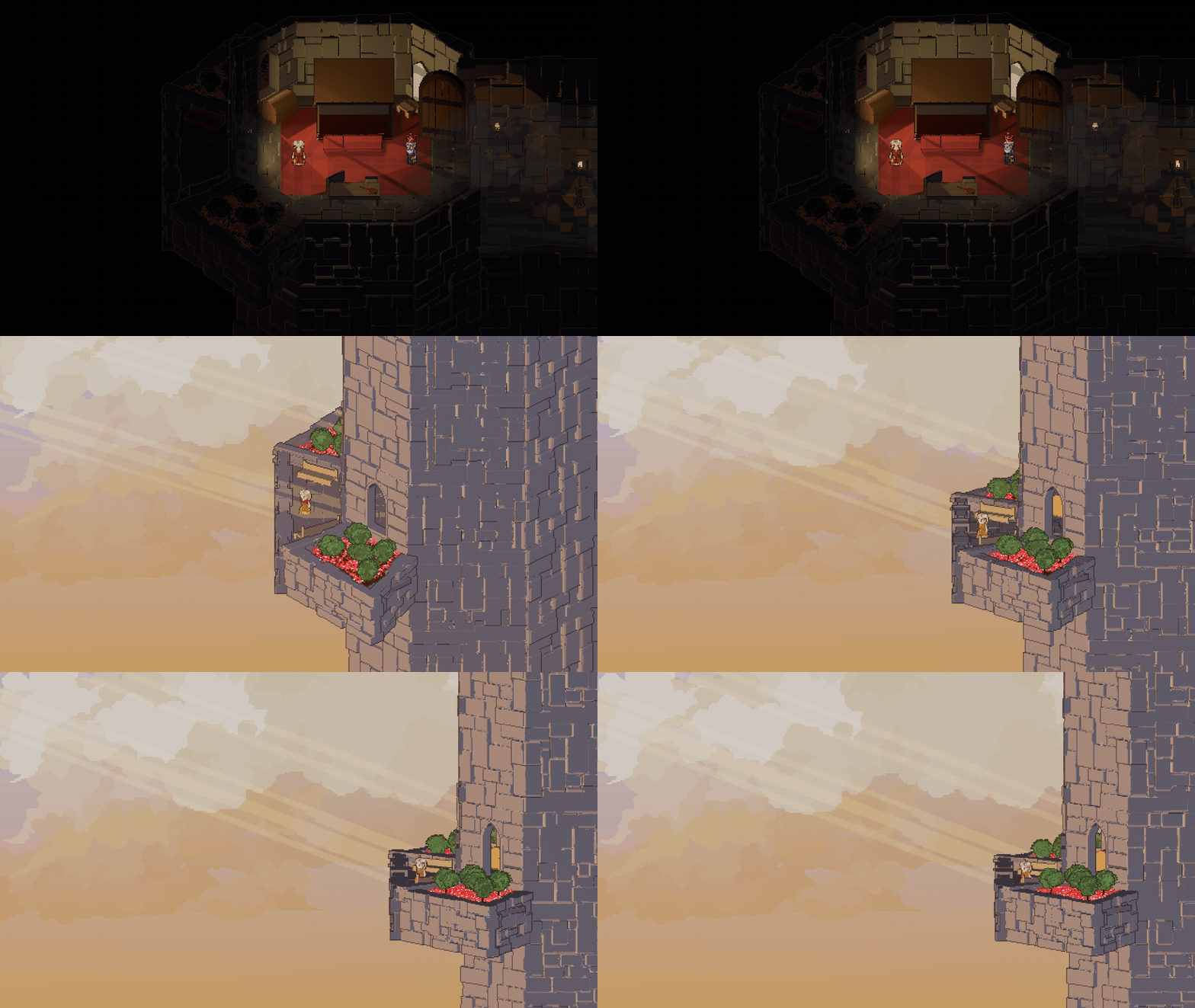
Uncrowned player character walks from a starting room onto a balcony, revealing the castle exterior in warm sunlight

-Uncrowned: world & atmosphere-

Narrative & Experience Direction

Uncrowned asked us to make a complete narrative RPG, so I kept the overall player journey in view as I developed the minigames and progression. I was responsible for every minigame, from the initial idea through playable execution. Working alongside the team’s narrative and world development, I considered how each encounter could change the pace, give the player a different kind of challenge and make the next reward feel worth pursuing.

Story Structure & Progression

The narrative used a foldback structure, with different paths reconnecting at shared events. This helped the team plan multiple endings within the scope of the project. I worked on the progression around that structure: when an encounter appeared, what it expected the player to know, and how its rewards affected what came next. Those decisions needed to make sense across the story, including the points where different paths came back together.

Minigame Design & Prototyping

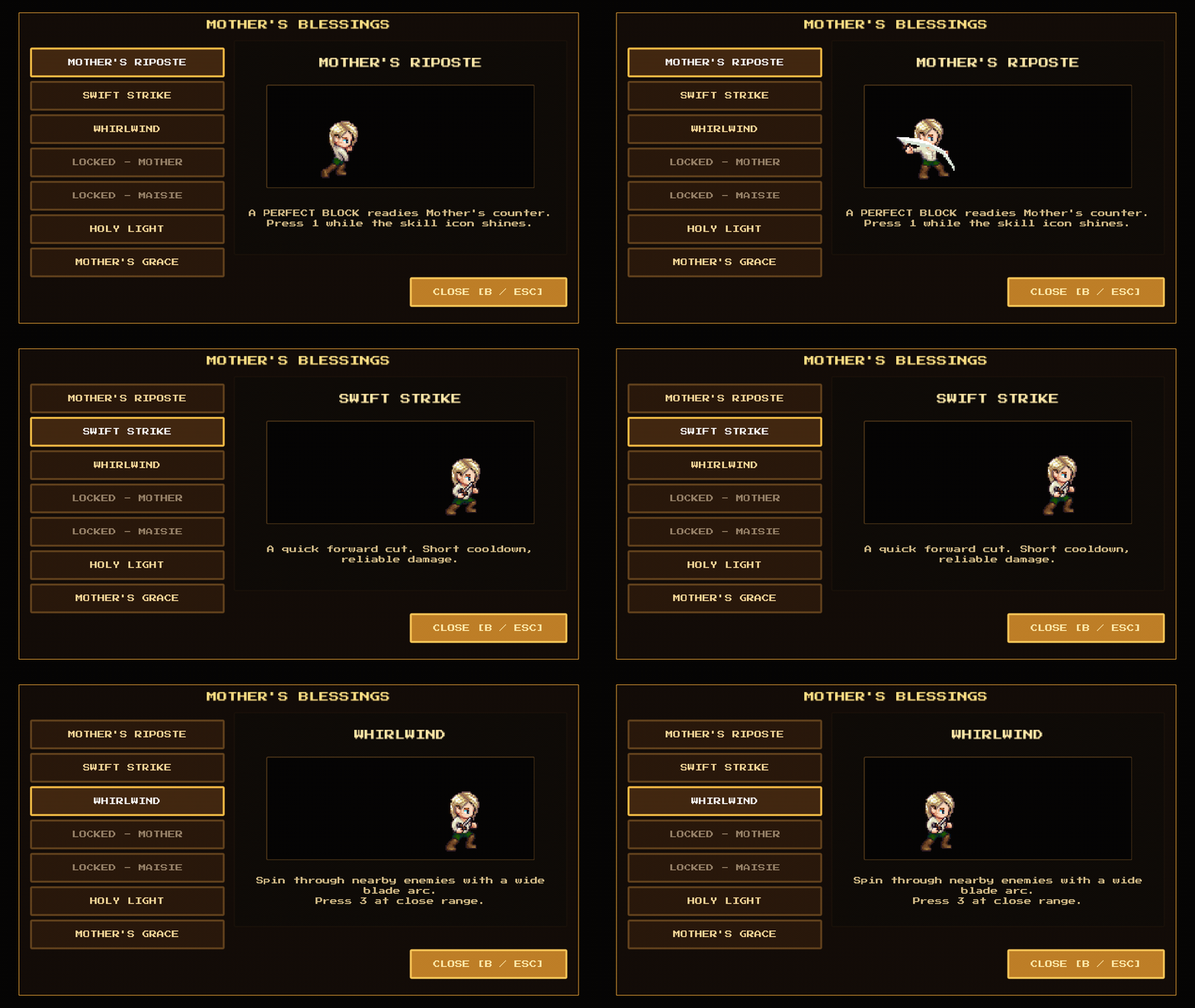
The minigames ranged from sword fighting to signature tracing and recognition challenges, giving players different ways to interact with the story. I developed their rules, tutorial flows and difficulty, then refined the designs as they became playable. For the sword-fighting encounters, that included movement, attack timing and defence. I also designed skill progression and the unlock tracker, with previews and descriptions that let players see what an ability offered before trying it.
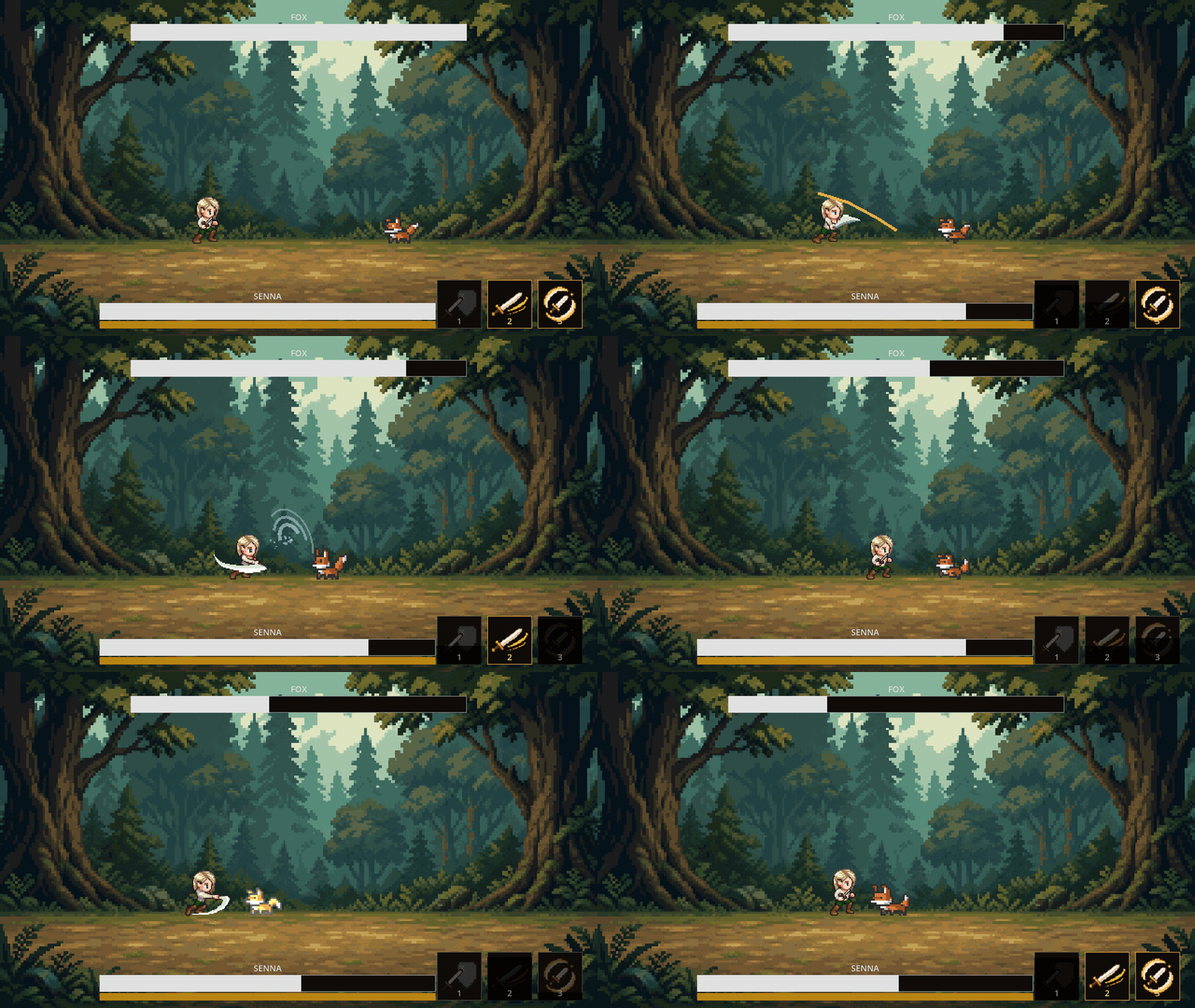
Uncrowned sword-fighting minigame: the player battles a fox with the full combat skill bar unlocked

-Uncrowned: sword combat-

Uncrowned skill menu showing animated previews of three sword-fighting abilities

-Uncrowned: skill previews-

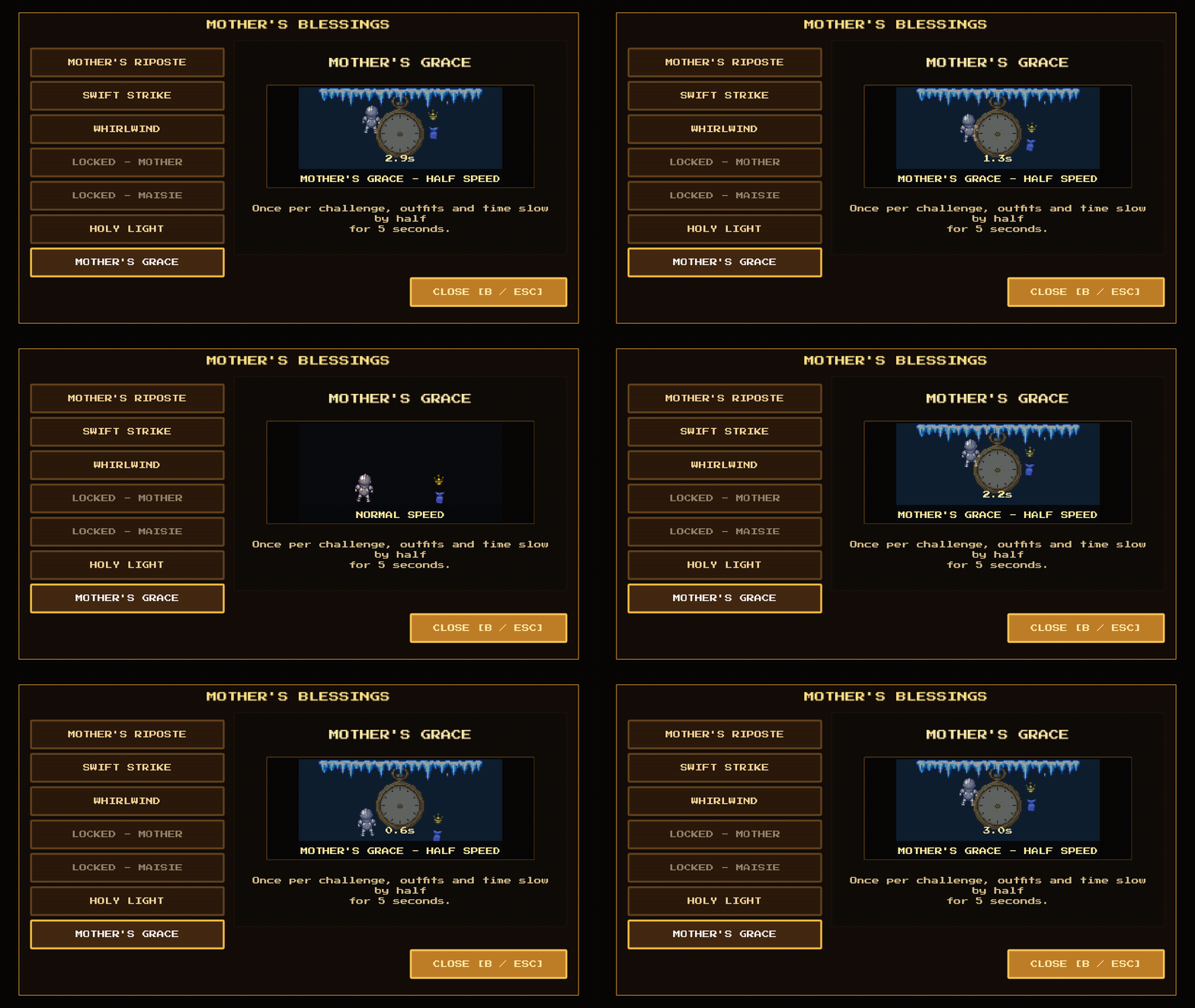
Uncrowned skill reference: clock and ice effects demonstrate a temporary slow-time ability

-Uncrowned: slow-time ability-

Playtesting & Refinement

Playtesting showed that players were confused by skills and unlock requirements. I went back to the tutorials and progression tracker to improve the guidance, and later feedback indicated clearer understanding. For me, this was part of designing the progression itself. The rewards had to be supported by information players could understand and act on.

Final Design

The team brought the story, environments and gameplay together in a playable Godot RPG. My minigame and progression work became part of that wider experience, with tutorials, unlock guidance and skill previews supporting the way players learned the game.

Challenge

The difficult balance was between the narrative we wanted to tell and the game our team could deliver. Multiple endings brought a production cost, and reconnecting branches still had to preserve the significance of earlier choices. Within my own work, I had to keep the encounters enjoyable while ensuring their difficulty and rewards suited the wider journey. It was a question of where additional complexity improved the experience and where it made the project harder to complete.

Reflection

Revising the unlock guidance made me look more closely at the transitions between encounters, rewards and the player’s next goal. I would carry that attention into further narrative testing, following choices across the story and checking whether players recognise their consequences when paths reconnect. That would help us assess the experience of agency across the game.

Play the game: Uncrowned
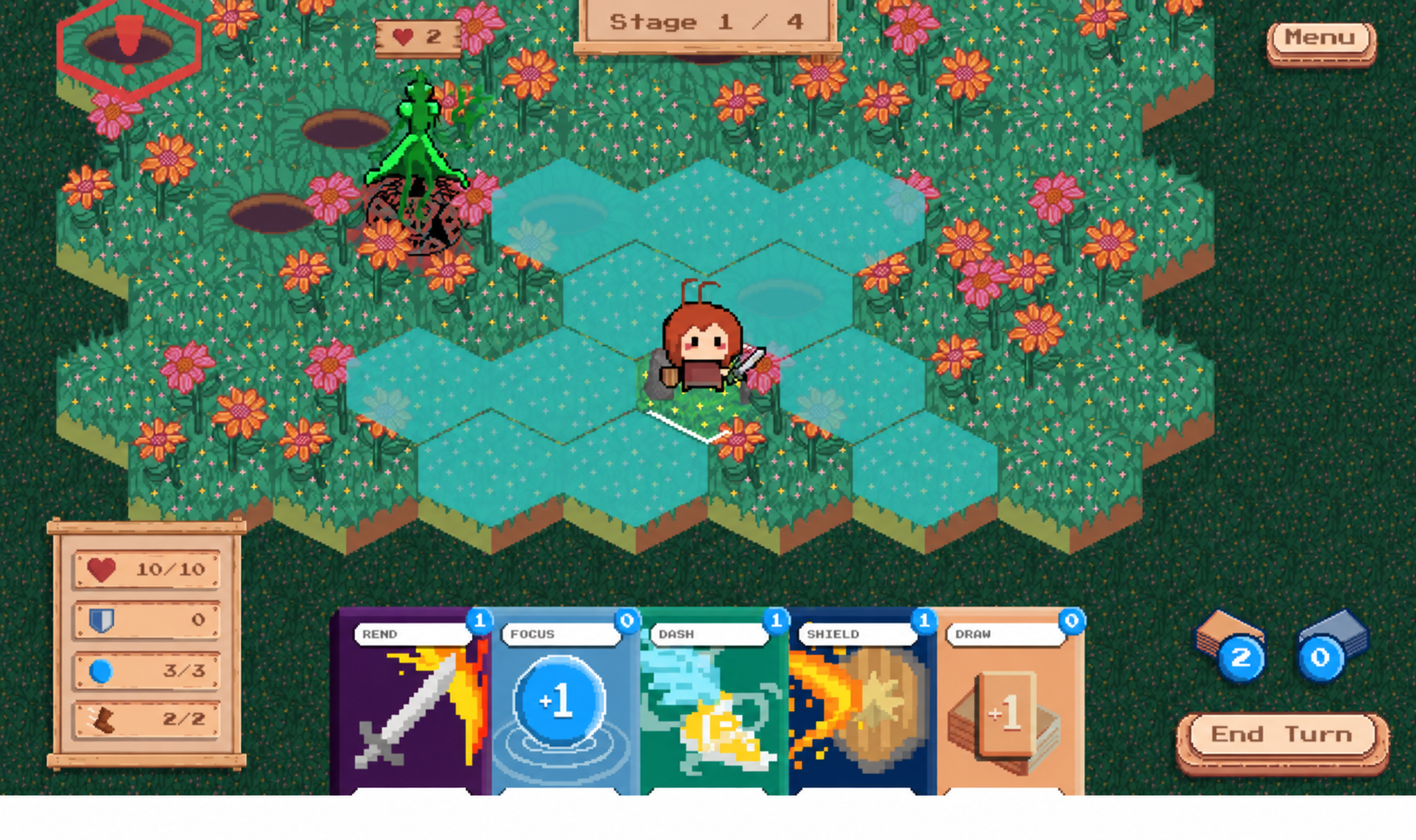
ElemAnt

Strategy Redesign · Unity

Concept & Design Direction

With ElemAnt, we had to establish the direction of the game as well as design its mechanics. The starting prototype left the audience, world and intended experience largely open. I helped shape the turn-based gameplay around the satisfaction of making a plan and responding to an opponent. That gave my work a focus as we developed the concept and lore: players needed to understand their options and have enough control for their decisions to matter.

Combat & Player Decisions

I considered positioning, abilities and enemy behaviour as parts of one tactical experience. Changing movement could change the value of an ability; an obstacle could alter the choices available in an encounter. I looked at those relationships when judging pacing and difficulty, including what information the player needed to anticipate a consequence. This was how I kept individual mechanics connected to the kind of game we were trying to make.

Gameplay & Interface Development

I designed menus and contributed to combat, enemy movement and behaviour, obstacles and animation feedback. Working with teammates, I helped define how player actions should be presented and how the game should communicate a response. The interface needed to make the rules understandable at the point where the player was making a decision.

Playtesting & Refinement

Playtests raised issues with difficulty and ability clarity. I examined the information available before a card was played and the feedback following an enemy turn, then used those observations to inform team revisions. I treated those issues as connected: players needed to understand why an action produced a result before they could adjust their strategy. That distinction mattered when judging the difficulty of an encounter.

Final Design

Our team developed the supplied prototype into a playable strategy game in Unity, with a visual world, clear objectives and decisions that carried from one turn to the next. My gameplay and interface work contributed to that shared result, connecting the rules with what players could see and act on.

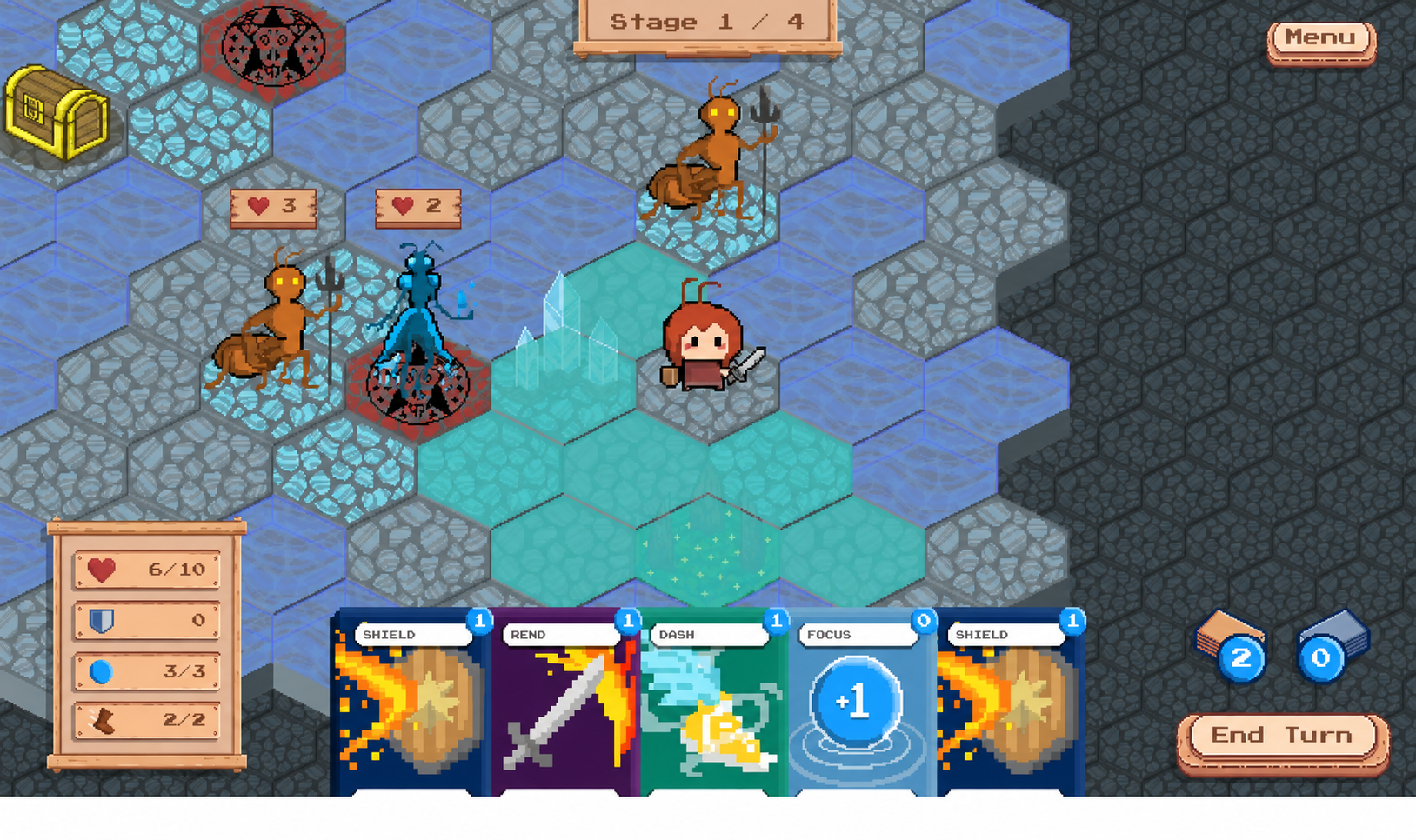
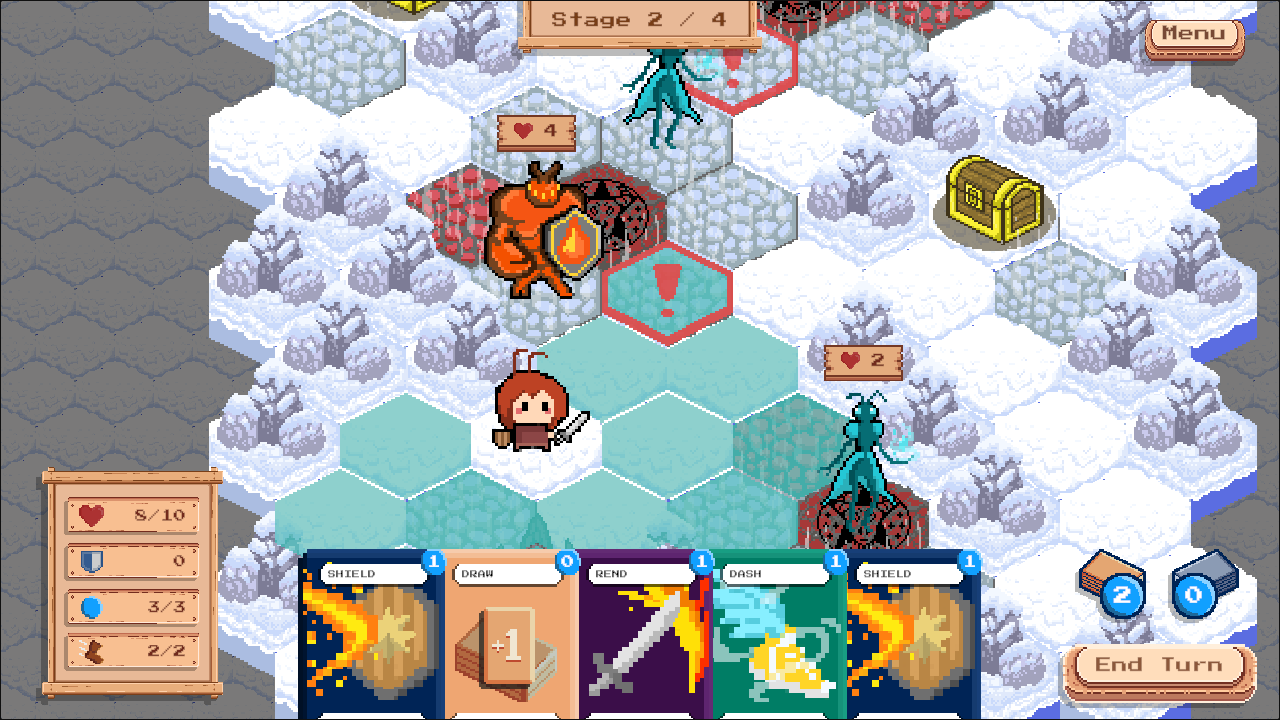
ElemAnt: a green enemy among flower-covered terrain, movement range and obstacles ElemAnt: an ice-blue enemy and two brown spear-carrying enemies with ice obstacles on a stone map ElemAnt snowy map with an orange tank enemy, two blue caster enemies and a treasure chest

-ElemAnt: map variety-

-ElemAnt: turn-based combat-

Challenge

The freedom to redesign almost everything also made scope a central concern. We had to identify the game’s appeal, retain enough of AntLion to respect the brief, and settle on a direction the team could build and refine. I weighed ideas against the whole experience, including the work they would introduce elsewhere in the game. A mechanic had to fit the world and the intended challenge, as well as be practical to balance.

Reflection

Taking such a small prototype into a fuller game made me more deliberate about where to spend design effort. For the next version, I would test with the intended audience over a longer session, looking at whether the game sustains their interest and where difficulty or unclear feedback interrupts it. I would use that evidence to decide what to develop further and what to simplify.

Play the game: ElemAnt

Next Work